



Will Ford Keep Its Build-to-Order Strategy?
Ford CEO Jim Farley wants to maintain the company’s build-to-order strategy after the chip shortage ends. Will consumers adapt?

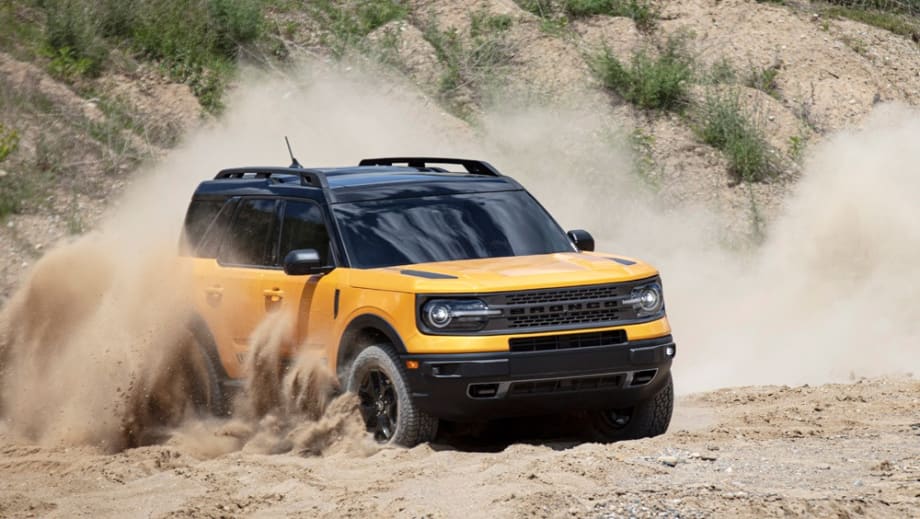
Ford Broncos have been a popular build-to-order vehicle.
Off-road.com
Ford Motor Co. pivoted to a build- to-order sales model to address inventory shortages amid the ongoing semiconductor shortage.
Now, CEO Jim Farley has announced he wants to keep the strategy after the chip shortage ends. Auto manufacturers benefit from this strategy with more efficient production and bigger profit margins. Others say it goes against consumer desires for immediate gratification.
Still, over 25% of Ford's retail sales in the third quarter came from its growing order bank. Ford currently has 139,000 vehicles on order. The company also gives a $1,000 discount for customers willing to wait for their vehicles.
When the sales rankings in the U.S. for September and October came out, Ford emerged as the top seller among automakers that report monthly results. The automaker’s numbers fell short of 2020 levels, but they outperformed the industry average.
Some dealerships are not as optimistic about a build-to-order sales model, however. They worry long waits will frustrate customers, causing them to cancel their orders once inventory becomes more plentiful. But other dealers feel these worries are unfounded. They point out that online retailers have proven that buyers will wait for their vehicles. And Tesla has long taken orders for later delivery.
Chip Diggs, director of Internet sales and marketing at Seelye Automotive Group in Kalamazoo, Michigan told Auto News that “The model for the consumer has changed. If they're willing to wait two or three days for something from Amazon, that's small, absolutely they'll wait for something that's [$50,000], [$60,000], $70,000 for six to 12 weeks."
Diggs adds that built-to-order vehicles account for at least half of Seelye Ford's sales in the last few months.
Build-to-order options will help smaller retailers compete with larger auto groups with bigger inventories, according to Diggs. And having fewer vehicles on the lot also would reduce their floorplan costs.
Diggs believes dealers will see success with a build-to-order model when they pitch it to customers correctly. A key benefit of ordering versus buying what’s on the lot is customization. Dealers have successfully sold vehicles in Europe this way for years.
Ford also sees it as a win. During the company's second-quarter earnings call with Wall Street analysts, Farley noted that having an order bank forces the automaker to reduce complexity and "put pressure on our industrial system to deliver quickly." He suggested the move would reduce the need for discounts that push slow-selling vehicles off lots.
Jason Cole, executive vice president of Cole Automotive Group, reports he would like to see the automaker balance an order bank with stock vehicles. A build-to-order solution doesn’t appeal to every customer.
"Some people you sell to in the car business … didn't wake up that morning planning to buy a car," he told Auto News. "I think you're still going to need inventory for that kind of situation. Not everybody's as particular as some consumers."
However, Ford isn’t asking dealerships to move all inventory to a build-to-order model. The automaker still wants dealerships to have some vehicles on their lots.
More Dealer Ops

Ladies and Gentlemen, This Is a Dealership: Why the Fundamentals Still Decide Who Wins
A teaching moment by a legendary football coach happens to apply perfectly in the auto retail space. Learn what it is and how to use it to your store’s advantage.
Read More →
Timing the Market Can Hurt Long-Term Program Performance
For dealer-owned reinsurance entities, avoiding volatility entirely can mean falling behind inflation and missing market rebounds that drive long term surplus growth. Missing just a handful of strong market days can materially impact cumulative returns—an important reminder for long horizon trust and investment strategies.
Read More →
Dealer Ads and the FTC
The agency has made it clear in recent enforcement actions and warnings, in auto retail and other industries, that advertised prices must include all nonoptional costs to the consumer.
Read More →
Used Autos Supply Dwindles
The March shopping surge, despite high prices, cut into inventory by the most since the thick of the pandemic, Cox Automotive analysts calculated.
Read More →
Managing Risk Effectively Through Changing Times
The variables influencing risk pricing have changed significantly over the past five years. Being proactive and responsive to emerging trends is not optional but essential.
Read More →
Survey Reveals What Won't Fix What's Breaking Car Sales
AutoPayPlus says extra-long auto loans are trapping consumers and threatening the dealer trade-in cycle, and that the industry is leveraging the wrong tools to combat high MSRPs.
Read More →
IA American Appoints Two Execs
Senior vice presidents of the company's agent and dealer channels chosen to support general agents and help auto dealers with sales and performance.
Read More →
Cox Automotive Acquires Inspection Firm
Full ownership of Alliance Inspection Management, or AiM, meant to unlock growth for Manheim inspection capabilities
Read More →
Assurant Expands Partnership With Holman
Extended collaboration delivers training, products and performance development to 30 newly acquired Holman dealerships
Read More →
Franchises, Throughput Down in First Half
A handful of states see franchise growth through June, while EV sales per store boost overall business in U.S.
Read More →