



Extreme Temps Hinder EV Efficiency
American consumers might be happy to know that their preferred hybrids are slightly less impacted by extreme temperatures than fully electric vehicles, according to a new study.

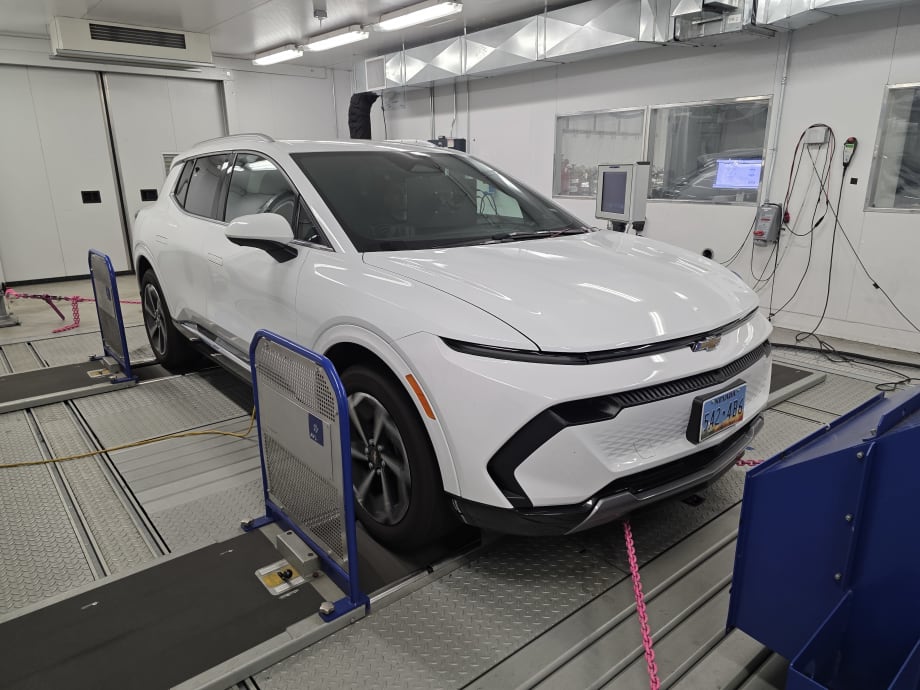
While hybrids are negatively impacted by extreme temperatures, the phenomenon is less pronounced than for their fully electric counterparts.
AAA
A new AAA study shows that the efficiency, range and operating costs of both electric vehicles and hybrids are negatively impacted by extreme temperatures.
The research builds on a study the organization conducted in 2019 that reached a similar conclusion. In the older study, it found that relative to a 75-degree baseline, fully electric vehicles had a reduced driving range of 41% when operating at 20 degrees and a 17% reduction when operating at 95 degrees. It didn't test hybrids.
The updated study assessed both fully electric models and hybrids, finding that while HEVs are negatively impacted by the extreme temperatures, they are less effected than their fully electric counterparts.
“EVs are efficient in moderate temperatures but lose significant range in the cold,” said Greg Brannon, AAA director of automotive engineering and research.
“We expected this from our previous research but were surprised by the 23% reduction in fuel economy for the hybrids in cold temperatures.”
When operating at an ambient temperature of 95 degrees, hybrids experienced a 12% drop in fuel efficiency, and EVs showed a 10% reduction, as well as an 8.5% loss of driving range.
When operating at an ambient temperature of 20 degrees, hybrids had an almost 23% loss in fuel economy while EVs had an over 35% drop in miles per gallon of gas equivalent and a 39% decrease in calculated driving range.
Regarding operating costs, hybrids showed an increase in fuel cost of $28 per 1,000 miles at 20 degrees and a $13 per 1,000 mile increase at 95 degrees. EVs operating at 20 degrees had a $32 per 1,000 mile increase when charged at home and a $77 per 1,000 mile increase when using public charging. EVs operating at 95 degrees had a nearly $7 per 1,000 mile increase charging at home and a $16 per 1,000 mile increase with public charging.
“Drivers should consider climate, energy costs, and driving patterns when choosing a vehicle that best fits their lifestyle,” Brannon said.
More Fixed Ops
Ban on Air Bag Inflators by Chinese Maker Proposed
NHTSA blames 10 deaths and two serious injuries on what its investigators believe were illegally imported air bag inflators. It’s taking public comments before deciding whether to ban them outright.
Read More →
Fix It Forward Program Helps Man Regain Mobility
Albuquerque consumer who suffered a life-changing injury regains the use of his vehicle after Fiesta Volkswagen's service team shared his story with DOWC Cares.
Read More →
ASE Connects Partners With Worldpac to Build Technician Numbers
The collaboration is intended to help auto dealerships, automakers and after-market shops further develop the technician pipeline.
Read More →
Not as Tickled With Tires
U.S. consumers are finding less satisfaction with the rubber that meets their roads, though their loyalty to tire brands has lately inched up.
Read More →
Auto Recalls Sank Last Year
2025 Sedgwick data indicate that the number of vehicles affected fell to its lowest point in more than a decade.
Read More →
ASE Winter Registration Now Open
The deadline to register for the industry standard certification testing is March 31.
Read More →
U.S. Drivers Overdue for Major Services
Data shows dealers have ample opportunity ahead of the holiday travel season.
Read More →
Auto Dealers Losing Service Customers
Study finds that though overall service drive revenue is up, loyalty is eroding
Read More →
Jeeps Can Catch Fire
Hundreds of thousands recalled, some for second time, to address battery flaw
Read More →
Ford Doubles Down on Backup Cameras
Automaker, in the middle of a big recall over the devices, offers 15-year warranty
Read More →