



Is Your Store Suffering From Cultural Lag?
Dealers must find a new unique selling proposition in a market driven by highly informed car buyers who already know your price and are more likely to be swayed by value.
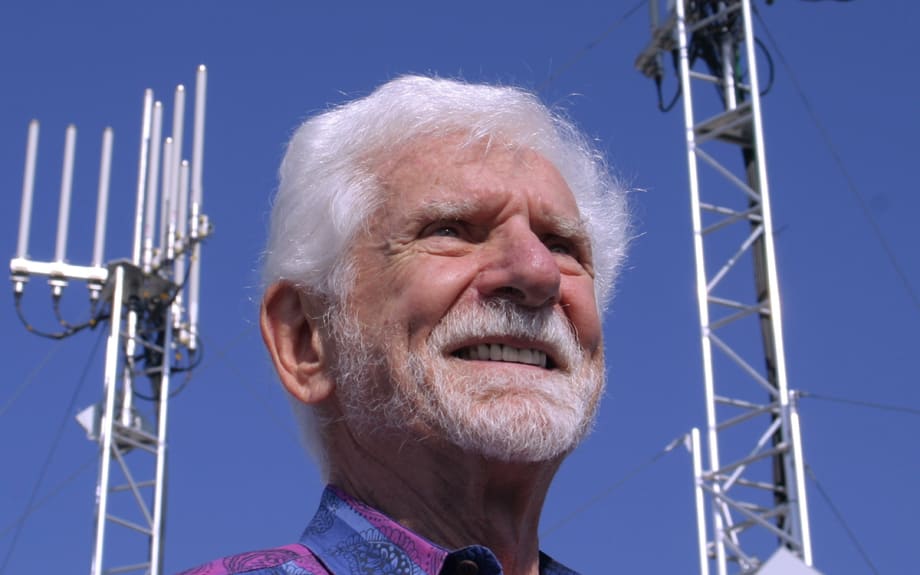
Former Motorola engineer Marty Cooper led the development of the first non-car cellphone in 1973 — and was certain the new gadgets wouldn’t replace land lines anytime soon.
Photo courtesy Martin Cooper via Wikimedia Commons
The first handheld cellular mobile phone, excluding a car phone, was invented in 1973 at Motorola by an engineering team led by Martin “Marty” Cooper. They brought it to market in 1983. Cooper was also the first person in history credited with making a handheld cellular phone call in public. It’s no surprise, then, that he is considered the father of the cellphone.
What is surprising is Cooper was convinced that cellphones would not replace local wire systems. “Even if you project it beyond our lifetimes, it won’t be cheap enough,” he said, in the 1980s.
Fast forward to more recent times and, according to aggregated data by the National Center for Health Statistics, 52.5% of homes had only wireless service during the first half of 2017.
It seems Cooper was right about the technology but wrong about its acceptance.
And he’s not alone. Simply put, new technology changes faster than new attitudes in response to the technology. In fact, there is a sociological classification for this disconnect. It’s called “cultural lag.”
So what does cultural lag have to do with selling cars?
Read: Study: Dealers and Car Buyers Want New Tech, Dealership Staff Resistant
Technology and Consumers
Consumers have taken to car shopping technology like ducks to water. They know exactly what they want and what they should spend for their desired vehicle by the time they enter the showroom, thanks to more than 13 hours of online research. They’ve checked a dealership’s ratings and reviews, and they’ve visited several third-party sites, such as Edmunds and Kelly Blue Book, not to mention Consumer Reports.
All of which means, the shield that historically protected dealership pricing information and gave a store more negotiating power has dropped.
So what does this new generation of car shoppers want? They’re looking for value.
Pricing transparency is now the rule of the day. Consumers are better informed and more empowered than ever, resulting in a cultural lag within your sales process.
They already know your price. This makes it harder for your sales team to separate your dealership from the competition. By make and model, every new vehicle costs dealers everywhere the same, to the penny.
In other words, price is no longer a viable unique selling proposition, or “USP.” With no wiggle room in any deal, dealers are lucky to break even on a new car sale.
Find Your New USP
Fortunately, a study by J. D. Power reminds us that price isn’t the most important variable for consumers. According to their study, the No. 1 reason for picking one brand over another was reliability. Price came in much lower at No. 6.
So what does this new generation of car shoppers want? They’re looking for value. The easiest and quickest way to promote value is to understand and commit to your USP, which we know must be something other than price.
Now is a good time to get your team together and brainstorm ideas for a new USP. Perhaps your new USP is free oil changes for life, free roadside assistance, or a lifetime warranty. What separates your store might be the number of awards it has won or how long it’s been an integral part of the local community.
Whatever you decide is your USP, your messaging about that brand promise must be consistent across your dealership — both online and in the store. Your USP should become the driving force behind your culture.
After all, the shortest distance between an initial sale and a repeat sale is a promise kept.
David Adcock is executive vice president of Binary Auto Solutions.
More Dealer Ops

Ladies and Gentlemen, This Is a Dealership: Why the Fundamentals Still Decide Who Wins
A teaching moment by a legendary football coach happens to apply perfectly in the auto retail space. Learn what it is and how to use it to your store’s advantage.
Read More →
Timing the Market Can Hurt Long-Term Program Performance
For dealer-owned reinsurance entities, avoiding volatility entirely can mean falling behind inflation and missing market rebounds that drive long term surplus growth. Missing just a handful of strong market days can materially impact cumulative returns—an important reminder for long horizon trust and investment strategies.
Read More →
Dealer Ads and the FTC
The agency has made it clear in recent enforcement actions and warnings, in auto retail and other industries, that advertised prices must include all nonoptional costs to the consumer.
Read More →
Used Autos Supply Dwindles
The March shopping surge, despite high prices, cut into inventory by the most since the thick of the pandemic, Cox Automotive analysts calculated.
Read More →
Managing Risk Effectively Through Changing Times
The variables influencing risk pricing have changed significantly over the past five years. Being proactive and responsive to emerging trends is not optional but essential.
Read More →
Survey Reveals What Won't Fix What's Breaking Car Sales
AutoPayPlus says extra-long auto loans are trapping consumers and threatening the dealer trade-in cycle, and that the industry is leveraging the wrong tools to combat high MSRPs.
Read More →
IA American Appoints Two Execs
Senior vice presidents of the company's agent and dealer channels chosen to support general agents and help auto dealers with sales and performance.
Read More →
Cox Automotive Acquires Inspection Firm
Full ownership of Alliance Inspection Management, or AiM, meant to unlock growth for Manheim inspection capabilities
Read More →
Assurant Expands Partnership With Holman
Extended collaboration delivers training, products and performance development to 30 newly acquired Holman dealerships
Read More →
Franchises, Throughput Down in First Half
A handful of states see franchise growth through June, while EV sales per store boost overall business in U.S.
Read More →